
The Story of Tea
One leaf. One civilizational story.
From a wild leaf in China to a ritual shared across the world.
Begin the Story →The Story of Tea
What this book is
Tea began as a medicinal plant in China and became one of the commodities that connected economies, empires and everyday life across continents. It became a daily custom, then a trade valuable enough to move silver, shape imperial policy and contribute to wars. Along the way it was adopted by monks and merchants, courts and factory workers, and remade in every culture it reached. The Story of Tea follows that journey in three acts and sixteen chapters — including the chapters where tea’s history was written in addiction, conquest and forced labor. It is told plainly, from the sources, and it ends where the journey still continues: at the table.

Act One
The Leaf
Discovery, medicine, discipline, and the first philosophy of tea.
Before it was traded, tea was a plant growing wild in the mountains of Yunnan, in southwest China. No one recorded who first tasted it, so Chinese legend credited the emperor Shennong. About two thousand years ago, a Han-era classic of Chinese medicine described it as bitter and cooling — a remedy that refreshed the mind and relieved fatigue.
Under the Tang dynasty (618–907), tea moved from the healer’s chest into daily life, and the tea house appeared, built for nothing but company. Around 760, Lu Yu wrote the Classic of Tea, the first book ever devoted to a single drink, precise enough to rank the water: mountain spring first, well water last.
In China’s Chan monasteries — the tradition Japan would later call Zen — tea kept monks awake through long meditation, and preparing it became part of monastic discipline. Japanese monks who sailed to Tang China to study Buddhism carried tea seeds home, and Japan’s court chronicle records one of them, Eichū, brewing tea for the emperor. It is where Act One ends: with tea crossing the sea from China to Japan.
The six chapters

The Wild Leaf
Tea grew wild in the mountains of Yunnan long before anyone named it. History lost the name of the first person to taste it, so Chinese legend gave it one: the emperor Shennong.
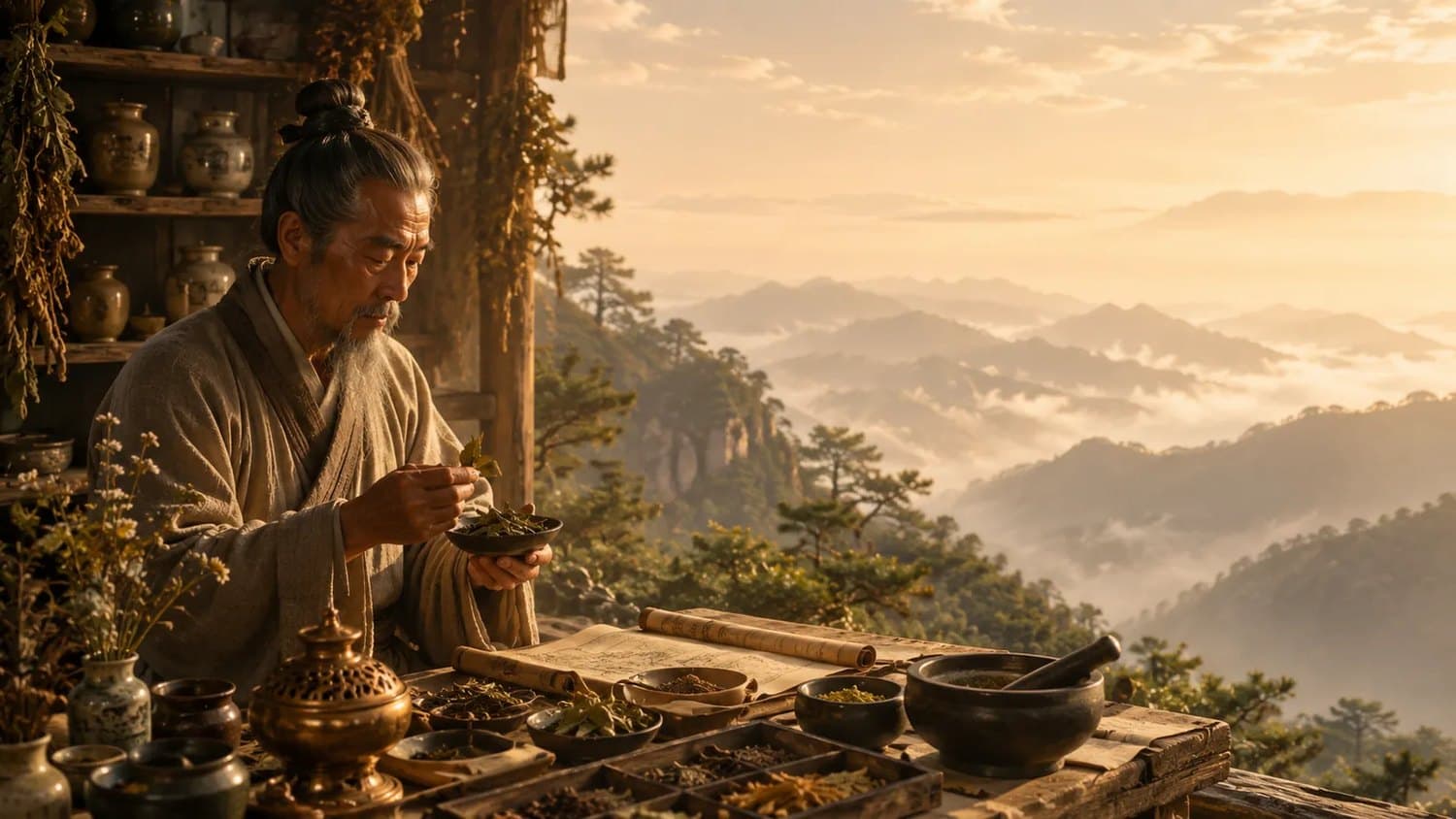
The First Medicine
About two thousand years ago, a Han-era classic of Chinese medicine recorded tea as bitter and cooling: it refreshed the mind and relieved fatigue. Tea was a remedy long before it was a pleasure.

From Remedy to Ritual
Under the Tang dynasty (618–907), tea moved from the healer’s chest into daily life, and a new kind of room appeared: the tea house, built for nothing but company.
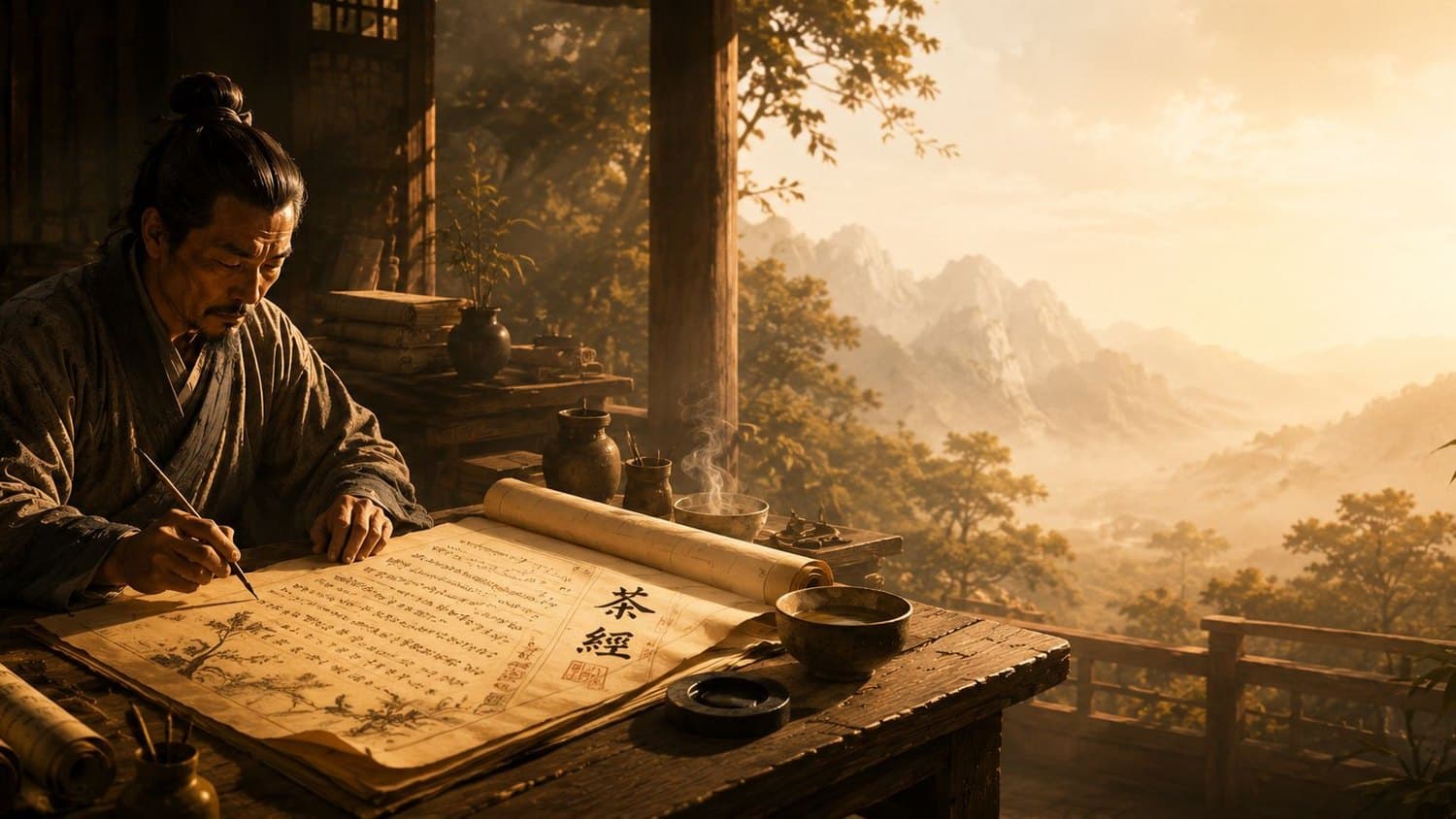
Lu Yu and the Way of Tea
Around 760, Lu Yu wrote the Classic of Tea, the first book ever devoted to a single drink. It went as far as which water to use: mountain spring first, well water last.
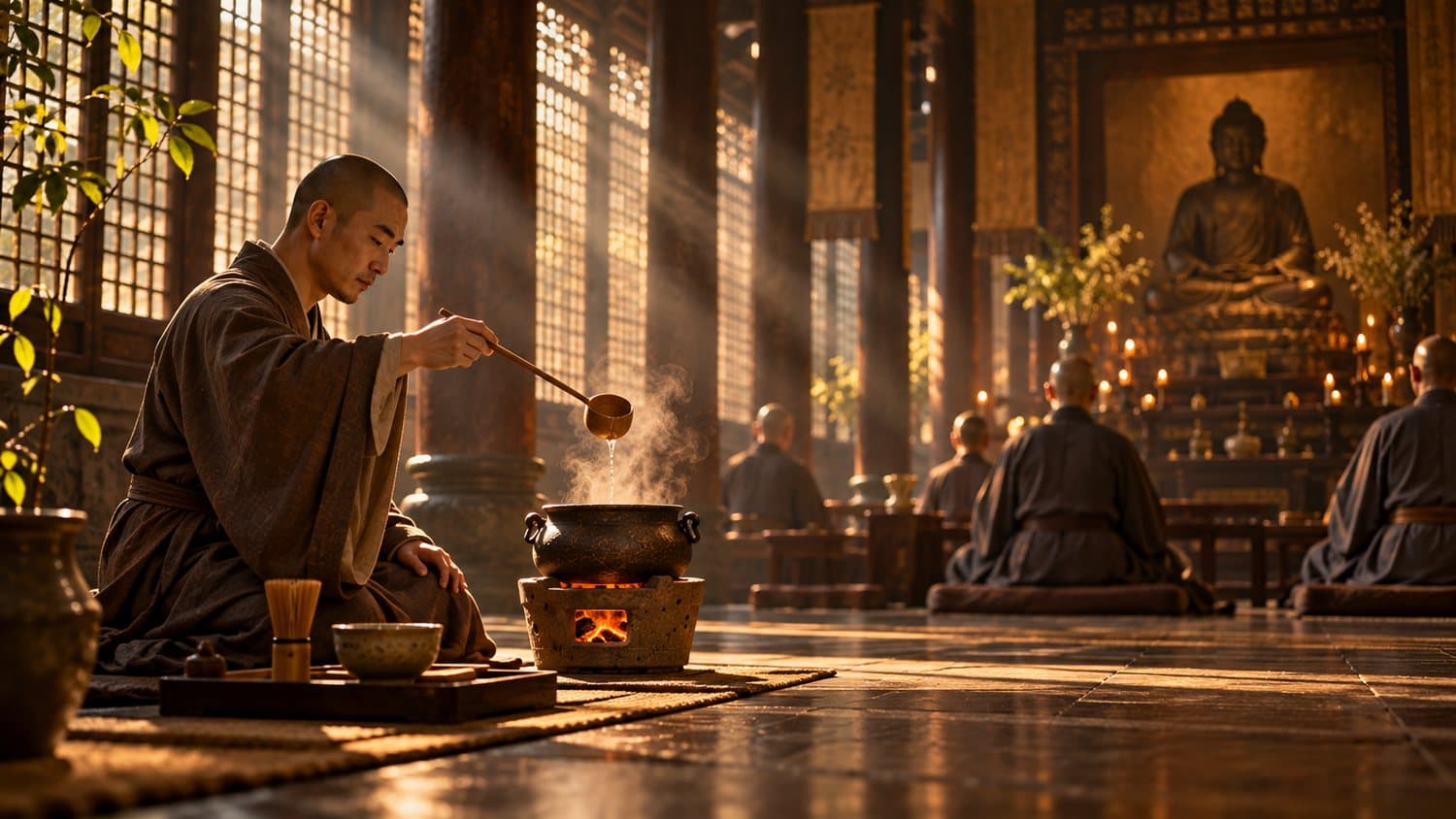
The Discipline of Tea
In China’s Chan monasteries (the tradition Japan would later call Zen), tea kept monks awake through long meditation, and monastic rule made preparing it part of the discipline itself.

The First Journey
Japanese monks who sailed to Tang China to study Buddhism came home with tea seeds. Japan’s court chronicle records one of them, Eichū, brewing tea for the emperor.