
The First Medicine
China, from the Han dynasty to the eve of the Tang
People first drank tea for the same reason they drank other bitter things: because it worked. To early Chinese healers, bitterness was not a fault but a sign of strength, and a bitter, cooling plant was one to be used with care, as a remedy.
What they valued in tea was its effect. It kept people awake and alert, and it eased tiredness. Today we know the leaf contains caffeine; Han physicians knew only what they could observe, and they observed it again and again.
Tea’s medical reputation grew with the written record. The Erya, China’s oldest dictionary, dated to the third century BCE, already lists tu, defined as a “bitter vegetable.” Around 220 CE, the physician Hua Tuo, one of the most famous healers in Chinese history, wrote in his Shi Lun that “to drink bitter tu constantly makes one think better.” Over these centuries, tea’s place in medicine was built claim by claim: a bitter herb that cleared the head, eased fatigue and helped the mind.
The written records also show tea becoming useful in daily life, not only in medicine. In 59 BCE, the scholar Wang Bao drew up a contract for a household servant in Sichuan. Among the duties it lists are to boil tea and fill the utensils, and to go to the market town of Wuyang to buy tea. It is the oldest known text that treats tea as a drink to prepare and a good to buy.
Sichuan, in the west, was where this change seems to have begun. Historians believe that it was there people first boiled tea leaves on their own into a strong, bitter drink, rather than mixing them with other herbs in a medicinal brew. It was the first step from a remedy toward a beverage.
Tea was not yet the drink we know. Outside Sichuan it was still often boiled with other ingredients, and it was drunk for what it did more than for how it tasted. Its most devoted users were still to come: in the centuries that followed, Buddhist monks would prize it for keeping them awake through long hours of meditation.
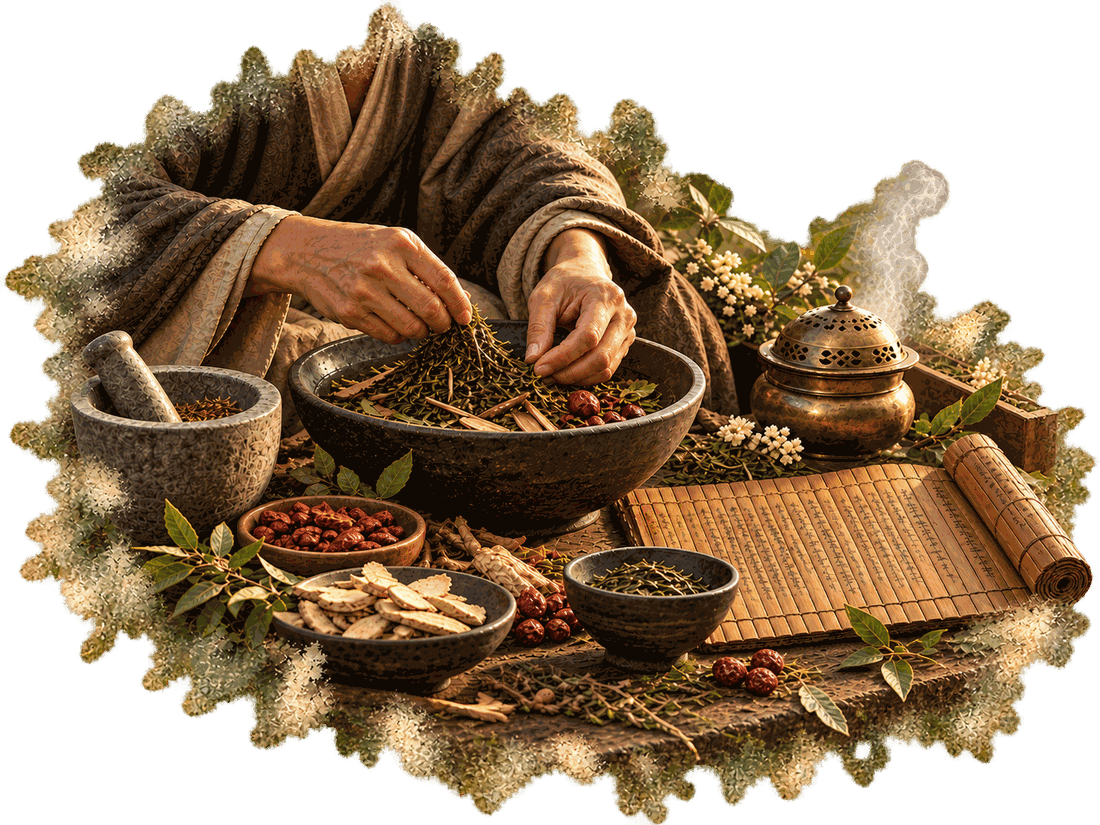
Healing. Harmony. Balance.
Healing. Harmony. Balance.
Chinese medicine sorted plants by their nature: hot or cold, sweet or bitter, and what each did to the body. Tea earned its place in that system as a cooling herb that cleared the head and countered fatigue.
The original Shennong Bencao Jing is lost. Its text survives because later physicians quoted it in their own works, and it was reconstructed from those quotations. The tradition that kept tea’s medical reputation alive was a written one, carried by scholars across centuries.
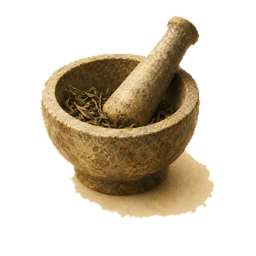
Remedy First
Tea entered Chinese writing as a medicine: a bitter, cooling herb used with care.
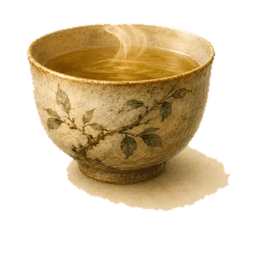
Body and Mind
Healers valued it for alertness and for relief from fatigue, effects we now link to caffeine.
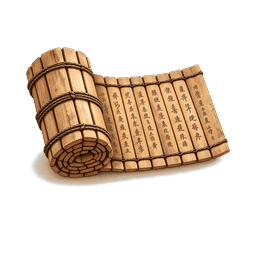
Recorded Wisdom
A dictionary, an herbal, a physician and a servant’s contract: tea entered the written record from many sides.
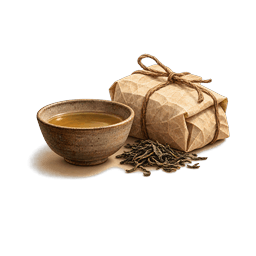
From Cure to Custom
By then, tea was already bought at market and served at home, not only taken as a cure.
It entered history as a remedy —
and stayed because people kept drinking it.
Medicine gave tea its first reputation. Daily use would give it a culture.
The alertness those Han healers prized is still what a cup of tea offers at Camelia Lounge, two thousand years on.
How did a remedy become part of everyday life?
Next · Chapter ThreeFrom Remedy to Ritual