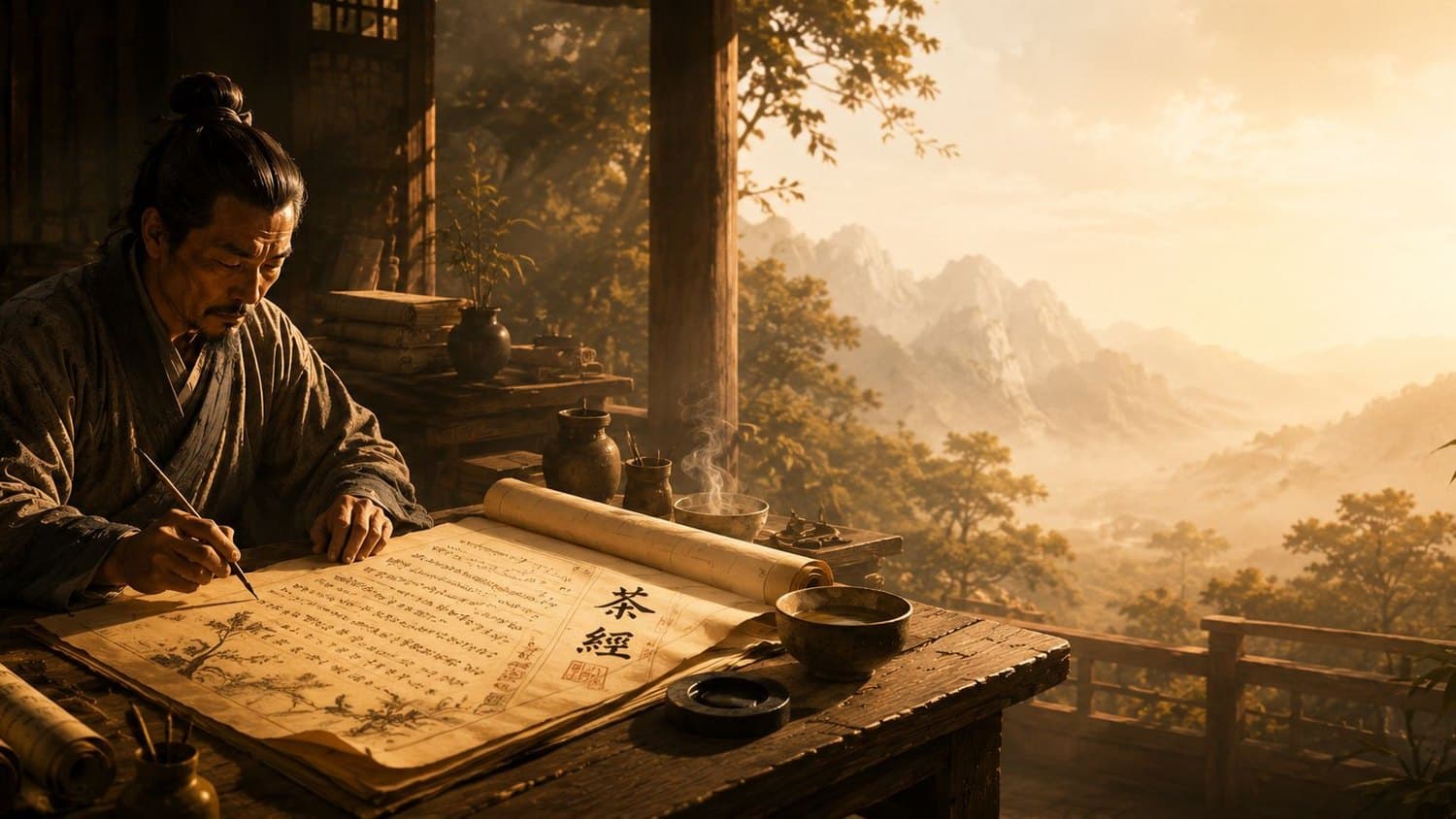
Lu Yu and the Way of Tea
Tang Dynasty, 8th Century CE
By the eighth century, all of China drank tea, but no one had written down how it should be done. The man who did had an unlikely start. Lu Yu was born in 733 in what is now Tianmen, in Hubei. He was abandoned as an infant and adopted by Zhiji, a Buddhist monk, and he grew up at the Longgai Temple, where he first learned to make tea.
He refused to become a monk. As a teenager he left the temple and worked as a comic actor in a traveling troupe. An official noticed his talent and sent him to study, and he spent six years as a pupil of the scholar Zou Fuzi.
When the An Lushan Rebellion broke out in 755, Lu Yu moved east into the tea-growing country around Huzhou. There he befriended the monk-poet Jiaoran and spent years visiting tea regions, studying how the plant was grown, picked, processed and brewed. Between 760 and 762, he wrote the Cha Jing, the Classic of Tea: about seven thousand characters in three scrolls and ten chapters, the first book devoted to a single drink.
Its ten chapters cover the plant and where it grows; the tools for making tea; how tea cakes are made; the utensils for brewing and drinking; how to brew; how to drink, with tea’s history; old records and stories about tea; a ranking of the tea regions; what may be left out when brewing outdoors; and a summary to hang on the wall.
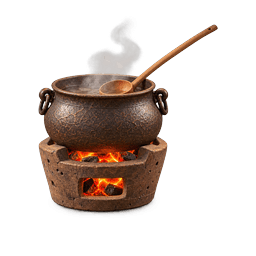
Tea in Lu Yu’s day was pressed into cakes, roasted, ground to powder and boiled in a cauldron, with a little salt added at the first boil. He set out every step: the fire, the water, the moment to add the tea. And he rejected the common habit of boiling tea with other ingredients. Tea, for Lu Yu, was to be drunk for its own taste.
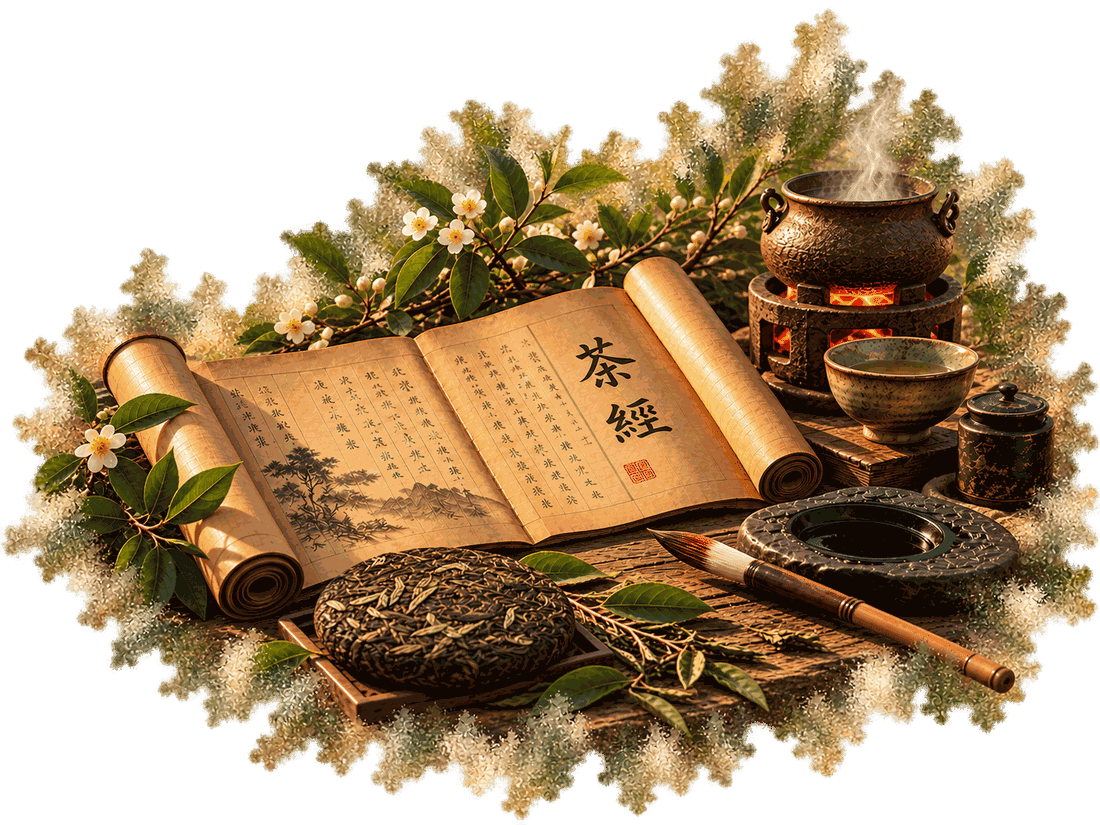
The first book ever written about the cup.
The first book ever written about the cup.
Lu Yu’s original manuscript is lost. The Classic of Tea survives in later printed editions, the earliest of them from the Song dynasty, and it is still read and studied today.
Its influence began in his own lifetime. Tea merchants of the time made small pottery figures of Lu Yu and honored him as the god of tea. Later generations called him the Sage of Tea, a title he still holds in China.
A Custom, Written Down
For the first time, tea’s whole practice was recorded, from the leaf to the bowl.
Taste Becomes Judgment
Lu Yu ranked waters, regions and methods, and gave reasons for each.
Tea Gains a Philosophy
He wrote that tea suits people who are careful in conduct and modest in their ways.
The First Tea Master
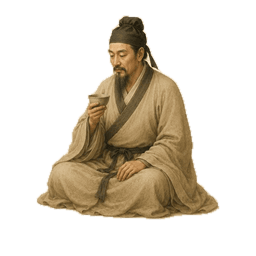
Merchants honored him as the god of tea, and China still calls him the Sage of Tea.
A custom is what people do.
A craft is what they learn to do well.
Lu Yu linked tea to character as well as taste. In China’s monasteries, that link would become a discipline.
Twelve centuries on, Camelia Lounge still brews by Lu Yu’s lesson: the water, the heat and the moment all matter.
What happens when preparing tea becomes part of a spiritual practice?
Next · Chapter FiveThe Discipline of Tea