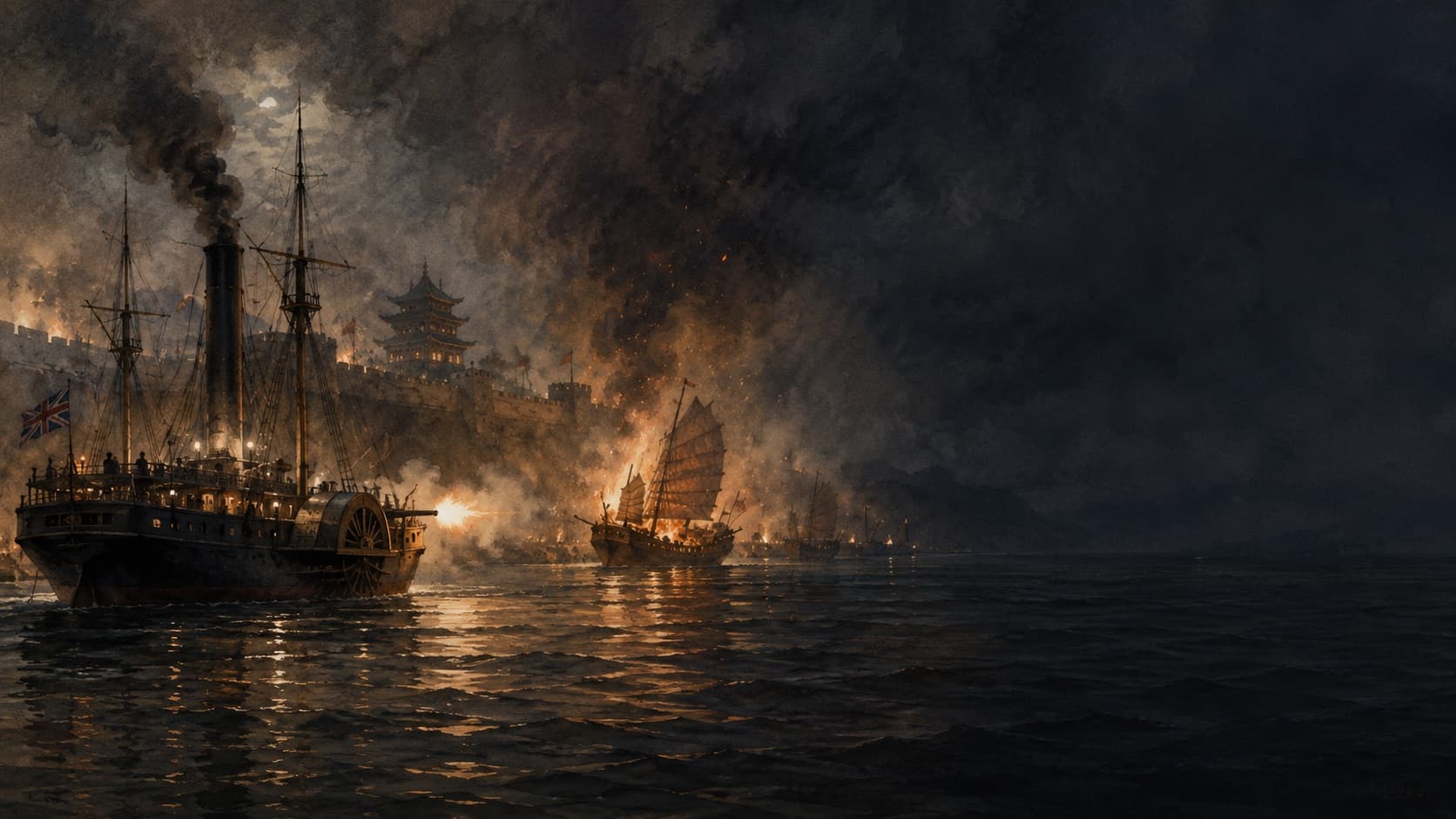
The Opium Wars
Canton to Beijing, 1839–1860
In the early nineteenth century, opium from British India reached China in rising quantities, and silver began to leave China to pay for it. Opium is addictive, and its spread brought serious social harm.
The Qing government had banned opium for decades, but the smuggling grew. In 1839 the emperor sent the official Lin Zexu to Canton to end the trade. Lin made the foreign merchants surrender about twenty thousand chests of opium and had it destroyed at Humen: dissolved with salt and lime in pools dug by the shore, and washed out to sea.
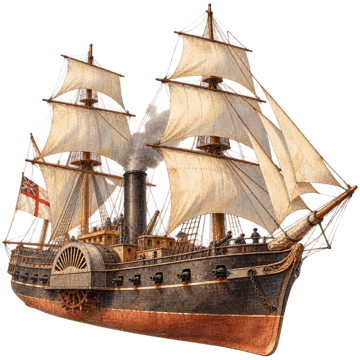
War followed. A British expeditionary force reached China in 1840, and the First Opium War, fought from 1839 to 1842, ended in a Qing defeat.
The Treaty of Nanking (1842) opened five ports to British trade, required China to pay a large indemnity and ceded Hong Kong Island to Britain. It was among the first of the agreements China would later call the “unequal treaties.”
A second war followed, from 1856 to 1860, fought by Britain and France. Its settlement opened more ports and legalized the opium trade. In 1860 British and French troops entered Beijing. Both looted the emperor’s Old Summer Palace, the Yuanmingyuan; British troops then burned it.
In China, the period that began with the First Opium War is remembered as the “century of humiliation.”
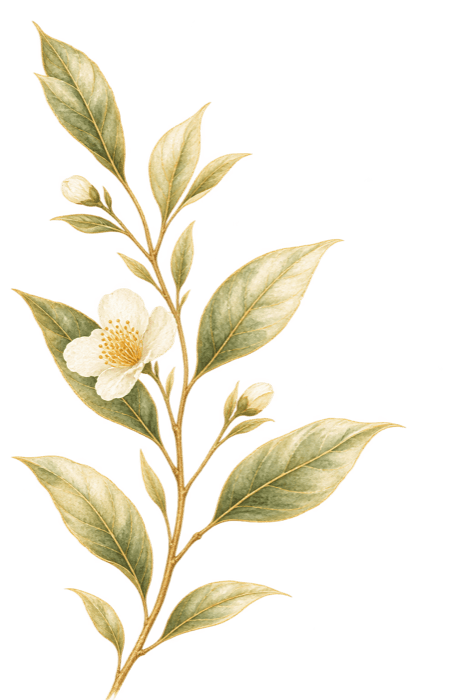
Britain, meanwhile, had begun to grow tea in Assam, in India, in the 1830s.
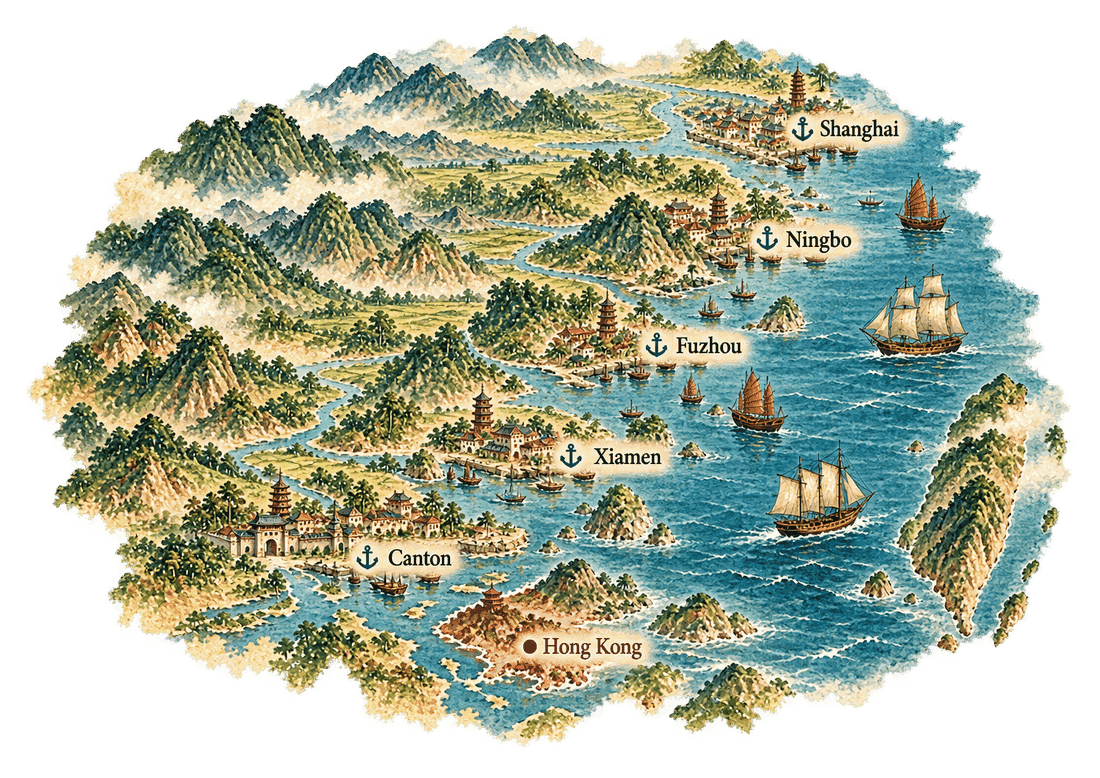
The Treaty of Nanking (1842) opened five ports to British trade and ceded Hong Kong Island to Britain.
The Commissioner’s Letter
In 1839 Lin Zexu wrote an open letter to Queen Victoria, asking her to put a stop to the trade. There is no evidence that it ever reached her, and no answer came. It was later published in The Times of London.
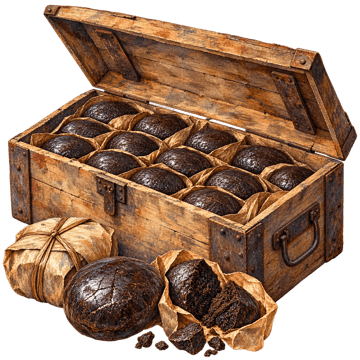
China Tried to Stop It
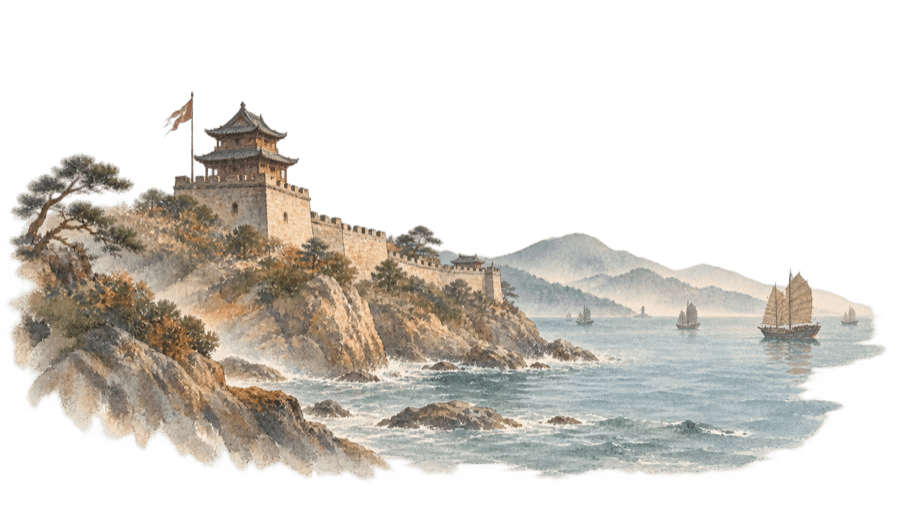
Bans and Lin Zexu’s seizure of 1839 aimed to end the opium trade.
War Decided It
Two wars, 1839–1842 and 1856–1860, ended in Chinese defeat.
Defeat Set the Terms
Treaty ports, an indemnity, Hong Kong and, in the end, a legal opium trade.
A Lasting Memory
China counts these wars as the start of a “century of humiliation.”
China tried to stop the opium trade;
after two wars, its import was legal.
During the Opium Wars, most of the tea Britain drank still came from China.
What happens when Britain begins to grow its own tea in India?
Next · Chapter SixTea Comes to India