Tea and Empire
Britain and Canton, the eighteenth and early nineteenth centuries
At the start of the eighteenth century tea in Britain was still a luxury, expensive enough that those who could afford it often kept it locked away. By the end of the century it was drunk across British society. Several forces changed the British tea trade. The East India Company imported tea in ever larger quantities. High duties fed a smuggling trade that, by contemporary estimates, brought in as much tea as the legal one or more, and smuggled tea was cheaper. Sugar from Caribbean plantations, worked by enslaved Africans, became part of the cup.
The turning point came in 1784. The Commutation Act cut the duty on tea from 119 percent to 12.5 percent. Smuggling stopped paying and largely ended, and the quantity of tea passing legally through customs rose steeply.
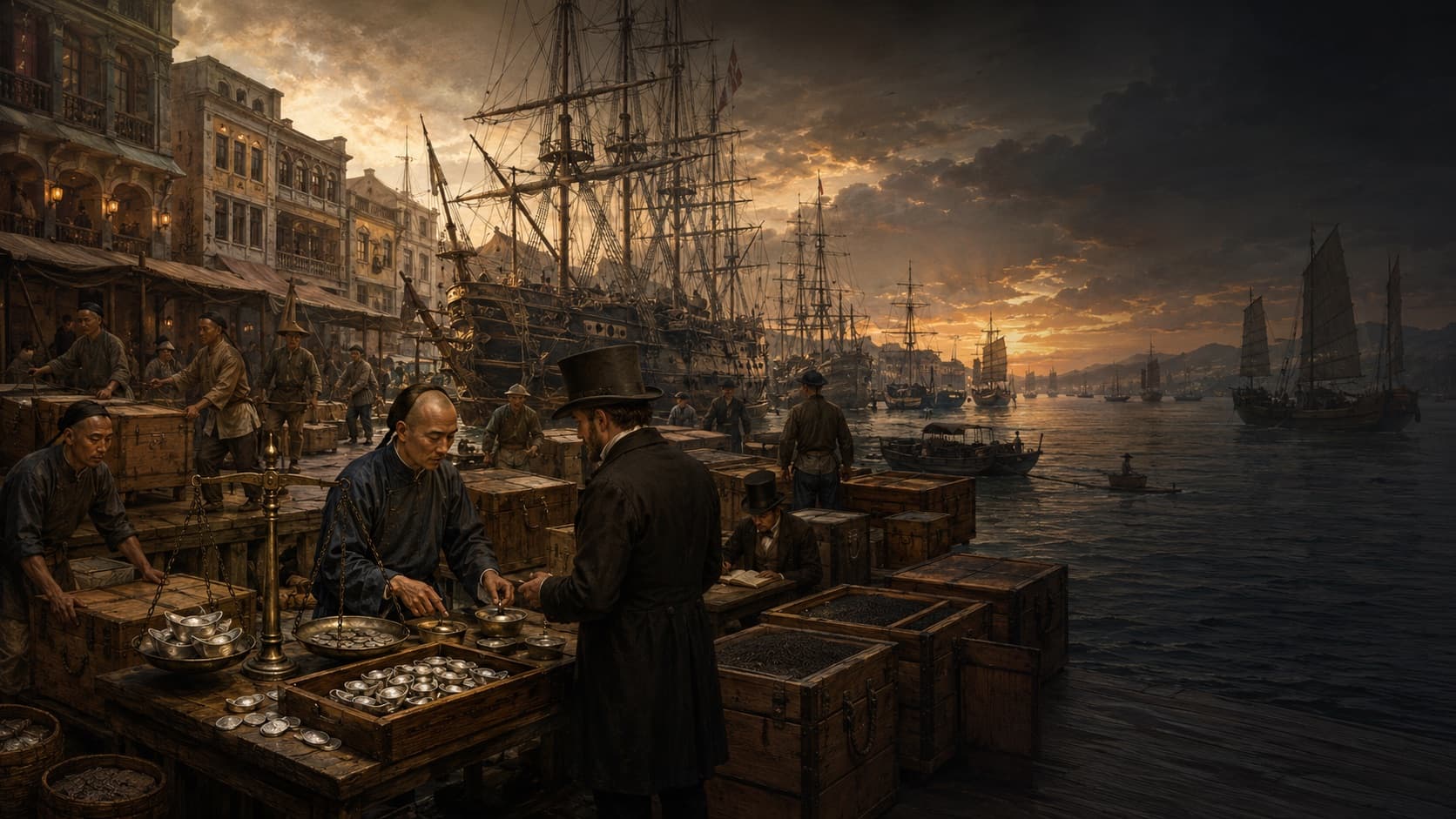
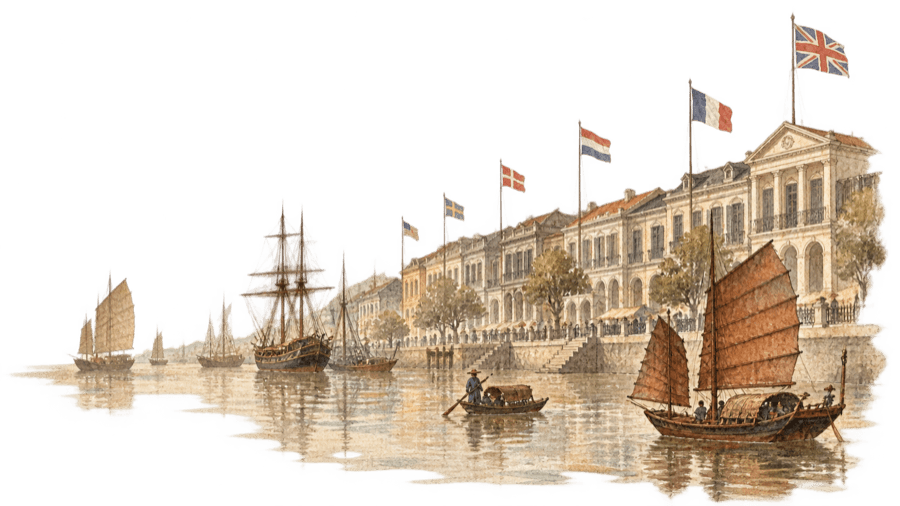
Britain’s tea came from China, and the trade ran through narrow channels. On the British side, the East India Company held a monopoly of the China trade. On the Chinese side, from 1757 the Qing confined Western seaborne trade to the single port of Canton, where foreign merchants dealt through licensed hong merchants.
China wanted little that Britain made, and accepted silver in payment. So silver flowed to Canton year after year, and Britain ran a large deficit in its trade with China. British merchants and officials grew concerned at the outflow.
Opium changed the balance. The East India Company controlled opium production in Bengal and sold the drug at public auction. Private merchants carried it to the China coast, where it was illegal. Chinese buyers paid for it in silver, and that silver could be used to buy tea. What followed belongs to the next chapter.
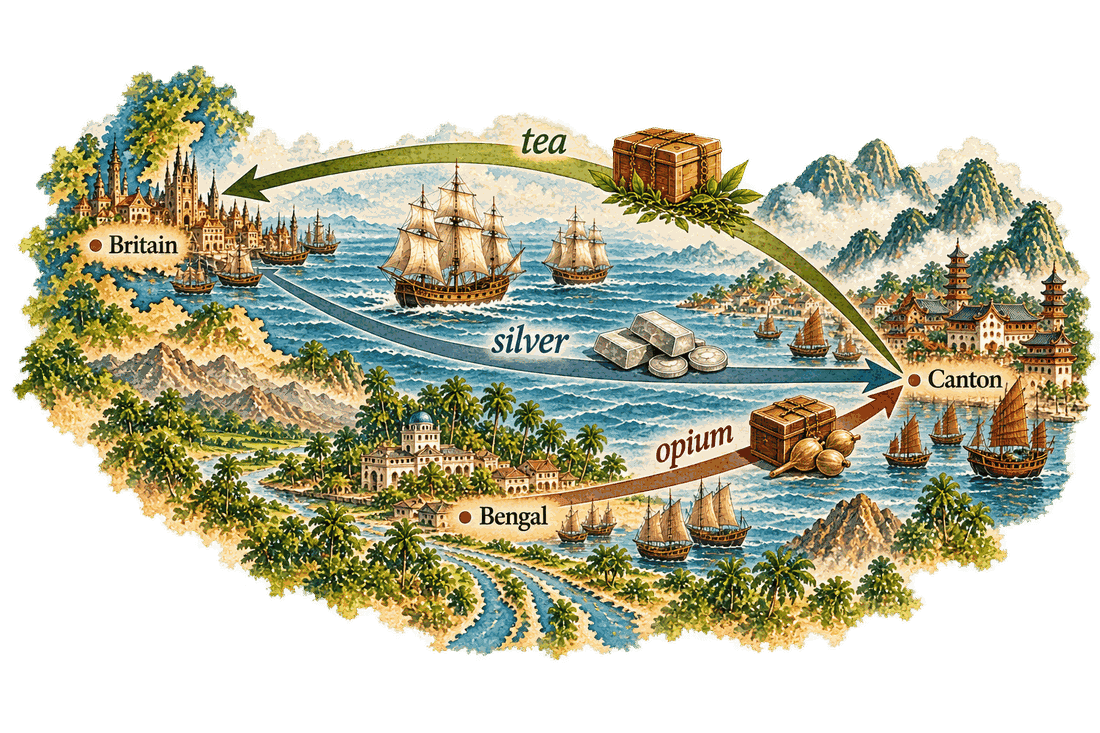
Tea went to Britain and silver to Canton, until opium from Bengal reversed the flow of silver.
The Smugglers’ Tea
Smuggled tea did not come straight from China. Much of it came from continental Europe, where other countries’ trade with China supplied it, and was run across to Britain’s coasts — to the south of England and to Scotland. It sold well below the price of tea that had paid duty, which is how it reached even poor households before 1784.
Taxes Shaped the Trade
High duties fed smuggling; cutting them in 1784 ended it and enlarged the legal trade.
A Drink for Every Class
By the end of the eighteenth century tea was drunk across British society.
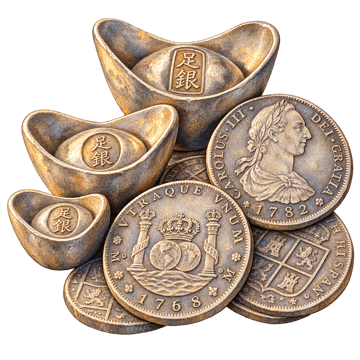
China Set the Terms
One port, licensed merchants and payment in silver.
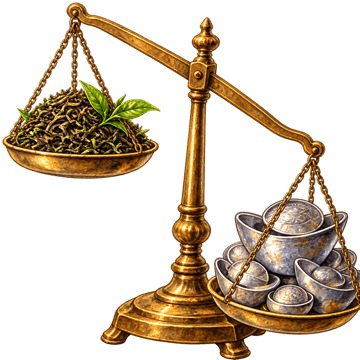
Opium Reversed the Flow
Chinese buyers paid silver for opium from British-controlled India, and that silver could then pay for tea.
Britain made tea its everyday drink,
and opium reversed the flow of silver.
In eighteenth-century Britain, much of the tea in the cup was smuggled and had paid no duty.
What happens when China tries to stop the opium trade?
Next · Chapter FiveThe Opium Wars