The Tea Horse Road
Southwest China to Tibet, from the Song dynasty to the twentieth century
The exchange rested on two needs. On the Tibetan plateau, tea churned with yak butter and salt had become part of daily life; written records place tea in Tibet from the seventh century, during the Tang dynasty, and Chapter 1’s find at Ngari shows that some had arrived earlier. China, for its part, needed horses for its armies, and the Tibetan regions could supply them.
The trade did not stay in private hands. In 1074 the Song dynasty set up a Tea and Horse Agency in Sichuan to run the trade and regulate the exchange of tea for horses. Later dynasties kept the system. The Ming continued to barter tea for horses and kept the tea trade under government control, using it to hold some political influence over Tibetan leaders.
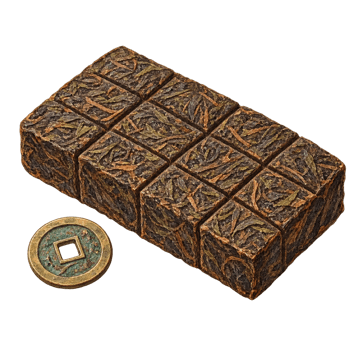
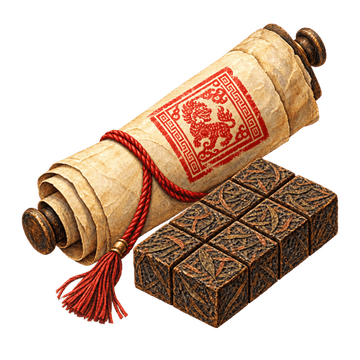
On the plateau, tea also became money. Brick tea was used as currency in Tibet and across Mongolia and Central Asia.
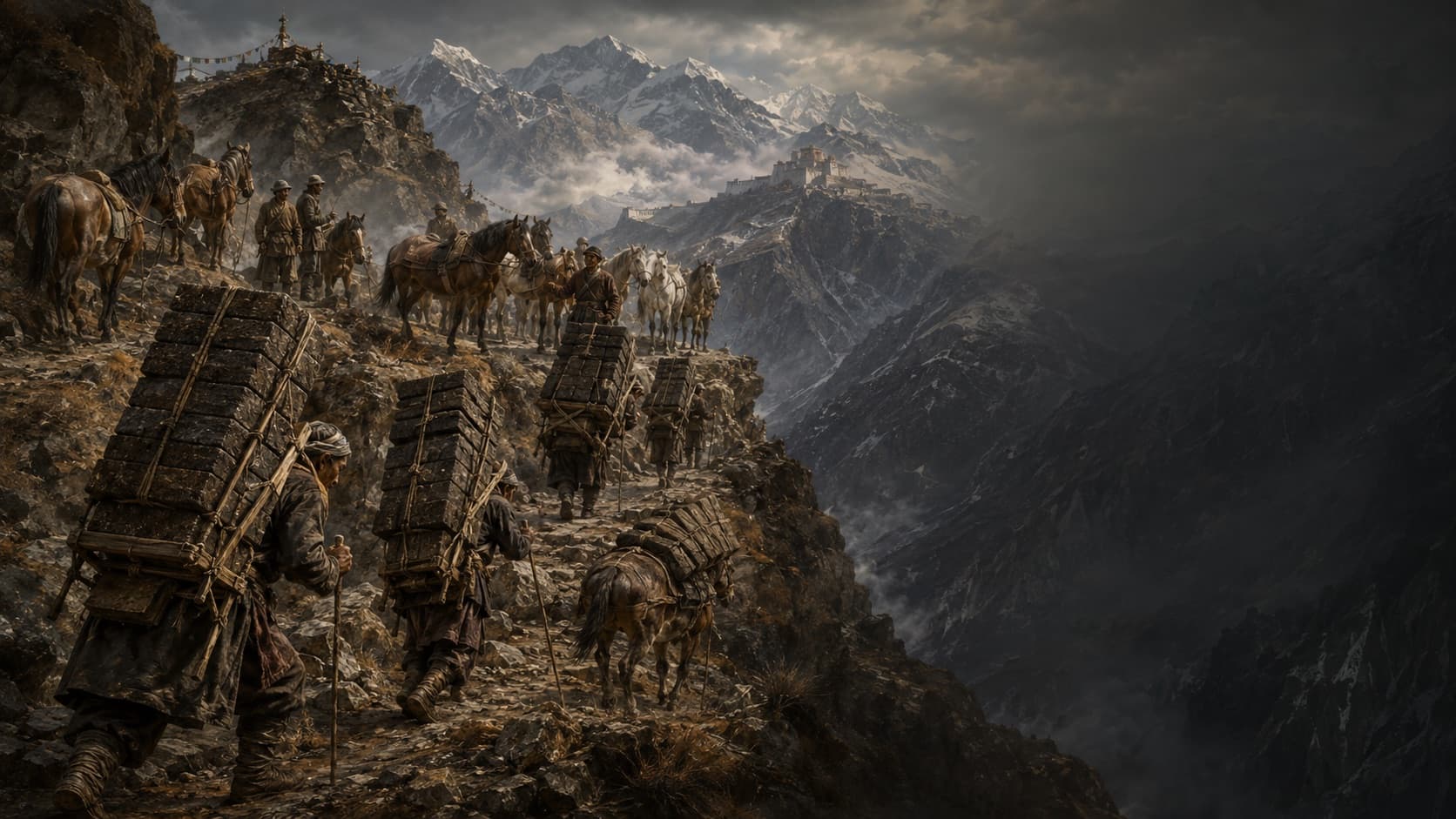
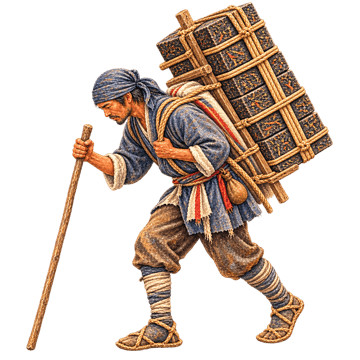
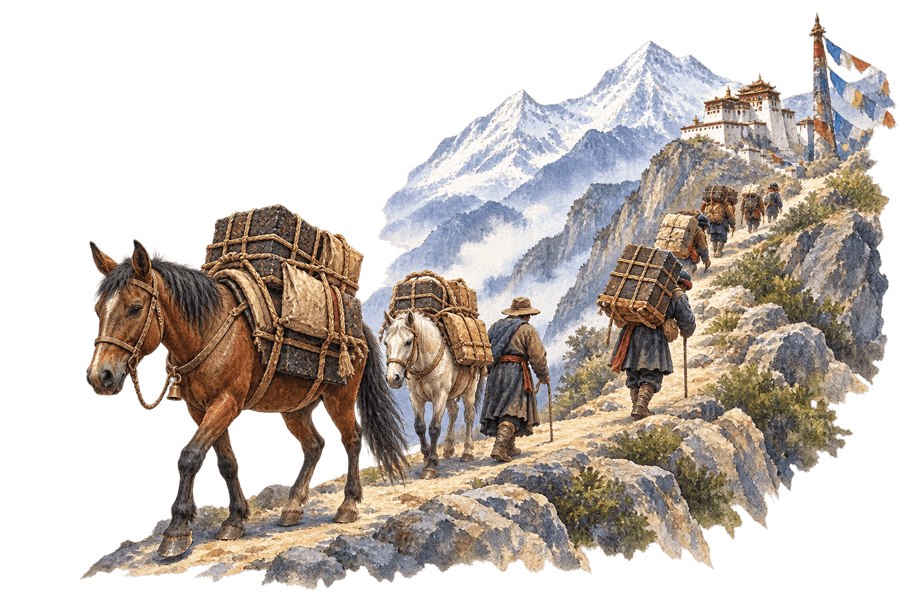
Moving it took great effort. The routes ran from the tea districts of Sichuan and Yunnan into Tibet through high mountain country. On the Sichuan route, porters carried the tea from Ya’an up to Kangding, with loads of 60 to 90 kilograms and sometimes more. Beyond Kangding, caravans of pack animals carried it on to Lhasa.
The exchange lasted, in one form or another, into the twentieth century.
By then, on the far side of the world, another trade in tea had grown far larger. It went by sea, toward Europe.
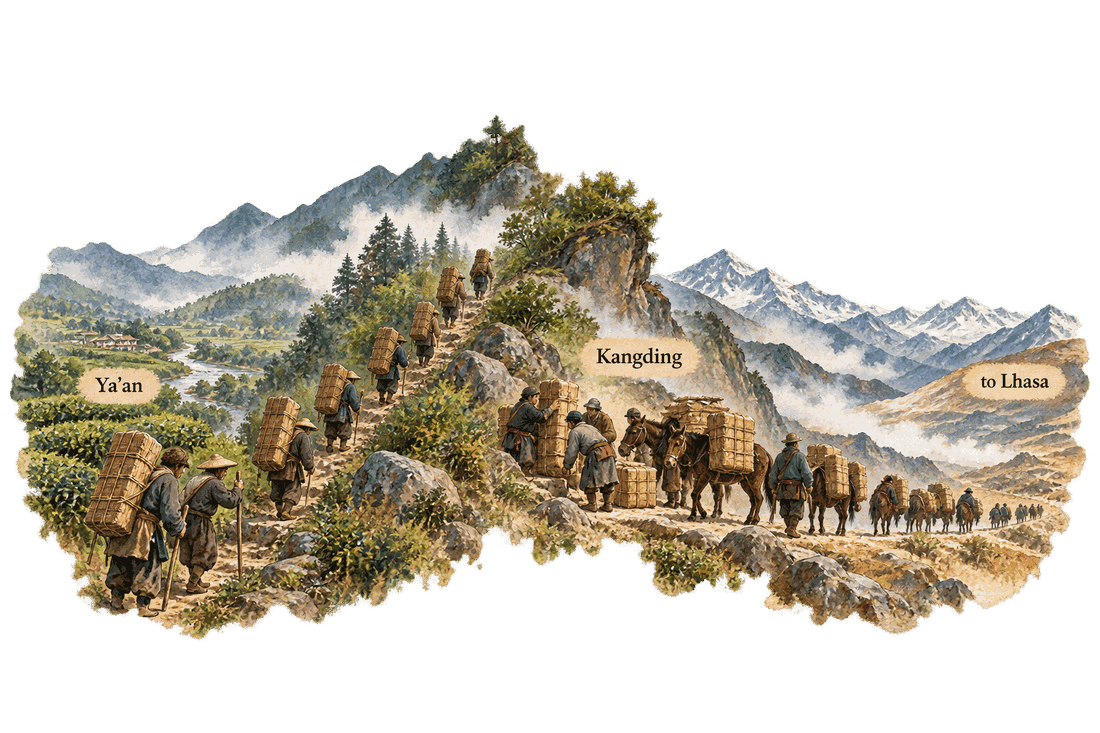
Porters carried the tea from Ya’an up to Kangding; beyond it, pack animals took it on toward Lhasa.
The Tea That Was Money
A tea brick could serve as money because it was durable: pressed hard, it survived handling and long caravan journeys. Bricks were also made in different grades of quality and valued accordingly. In central and northern Asia, tea bricks remained a medium of exchange into the twentieth century.
Need Met Need
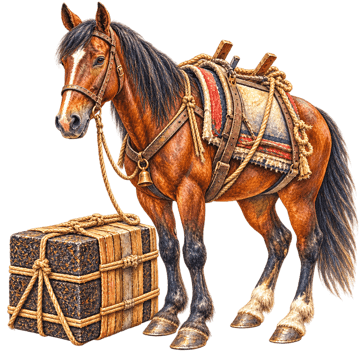
Tibet needed tea and China needed horses, so each had what the other lacked.
Tea Became Money
On the plateau and beyond, brick tea was used as currency.
The State Controlled the Trade
The exchange of tea for horses became a government-run system, used for military supply and political influence.
Geography Set the Method
Porters carried tea over the steepest mountain stretches; beyond Kangding, pack animals took it toward Lhasa.
On these roads, tea became currency,
and trade became an instrument of state power.
Butter tea is still made on the Tibetan plateau from tea, yak butter and salt.
If a leaf could buy a horse, what happens when it reaches a continent ready to buy it by the shipload?
Next · Chapter ThreeTea Reaches Europe