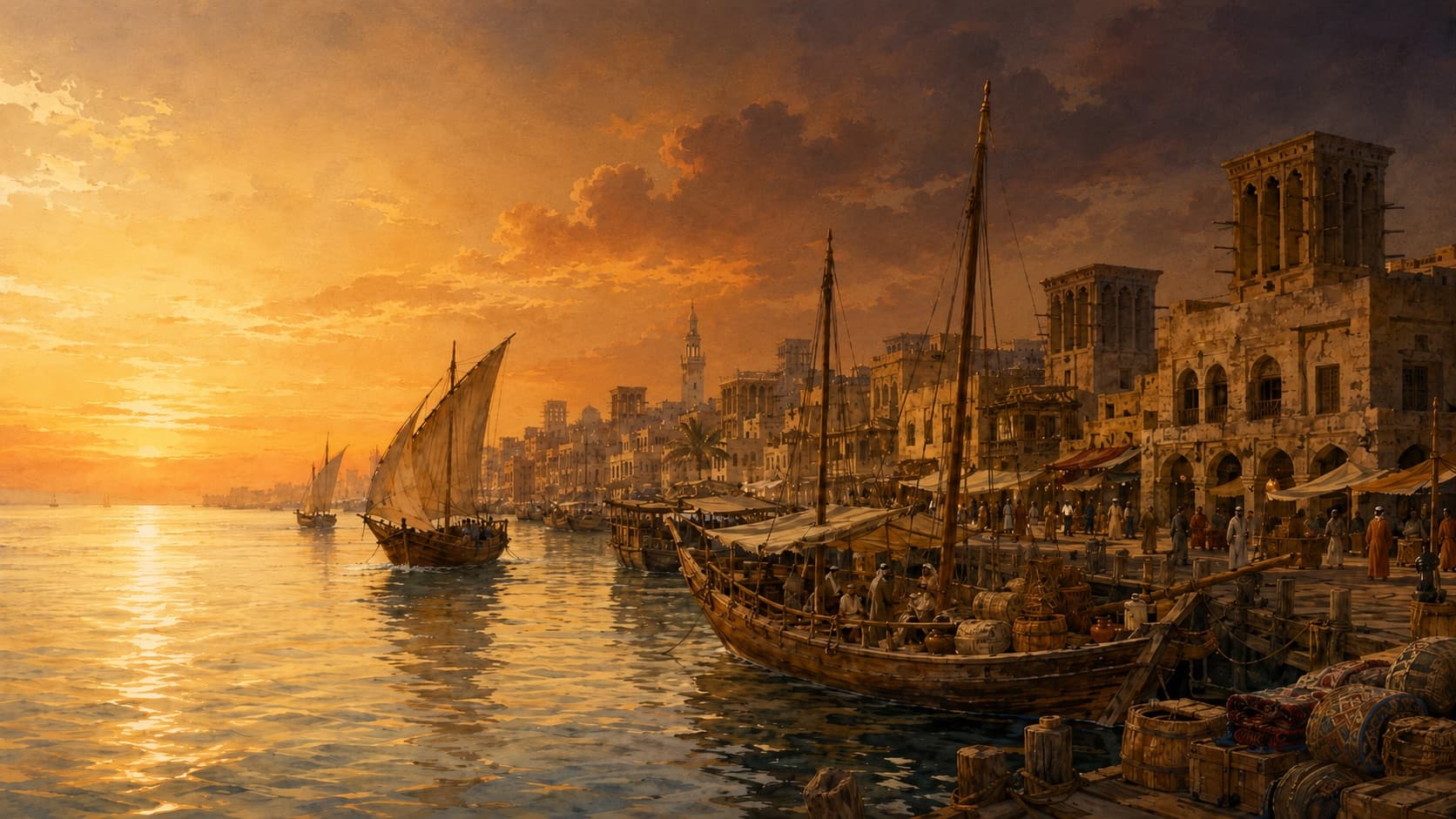
The Gulf Crossroads
The Gulf, from the early twentieth century to today
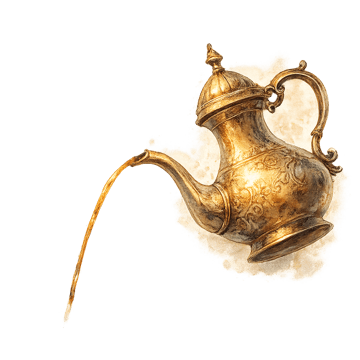
In the Gulf the drink of hospitality was coffee. Arabic coffee, prepared in front of guests and served first to the most important among them, was a ceremonial act of generosity. It was served in the majlis, the sitting room where people gathered, exchanged news and received guests.
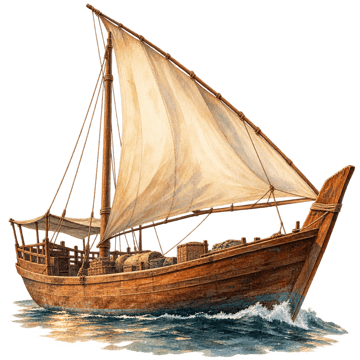
Tea came by trade, and later than in many of the places in this story. Persia had turned from coffee to tea in the nineteenth century, importing black tea from India. In Bahrain around 1920, tea was still largely a Persian drink: a British trade report found that most of the tea brought into Bahrain was re-exported to the Persian coast, and that locally it was drunk by Persians rather than Arabs.
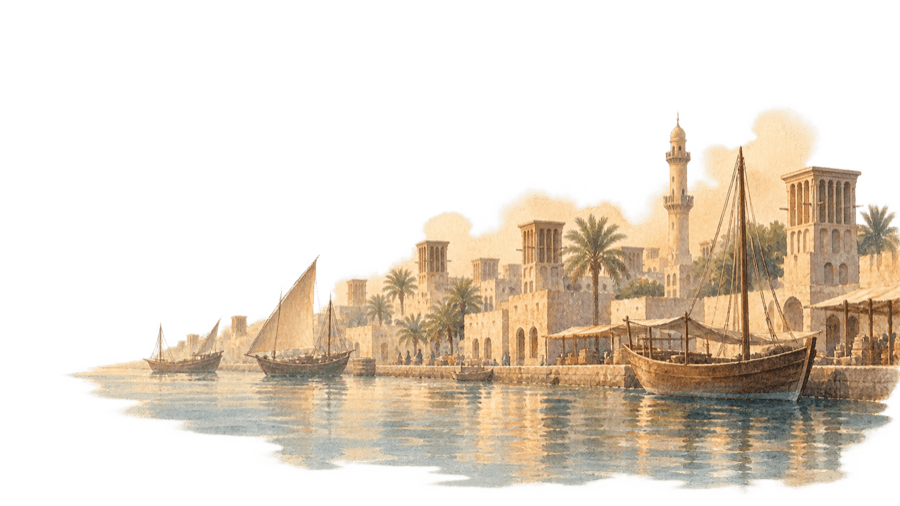
By the 1940s that had changed. Indian tea was imported for local consumption across the Gulf, in Bahrain, Qatar, Kuwait, Muscat and the ports of the Trucial Coast, Dubai and Sharjah.
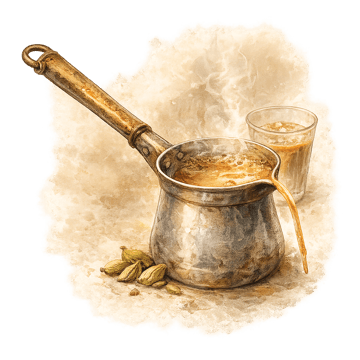
After the discovery of oil, the Gulf’s population changed. From the 1960s and 1970s, large numbers of workers came from South Asia, and they brought their strong, spiced milk tea with them. In the Gulf, this South Asian chai became known in its local form as karak: black tea boiled with condensed milk, often with cardamom or saffron, and served in small cups.
Today karak is drunk across the Gulf, bought at roadside stalls and drive-through windows and made at home.
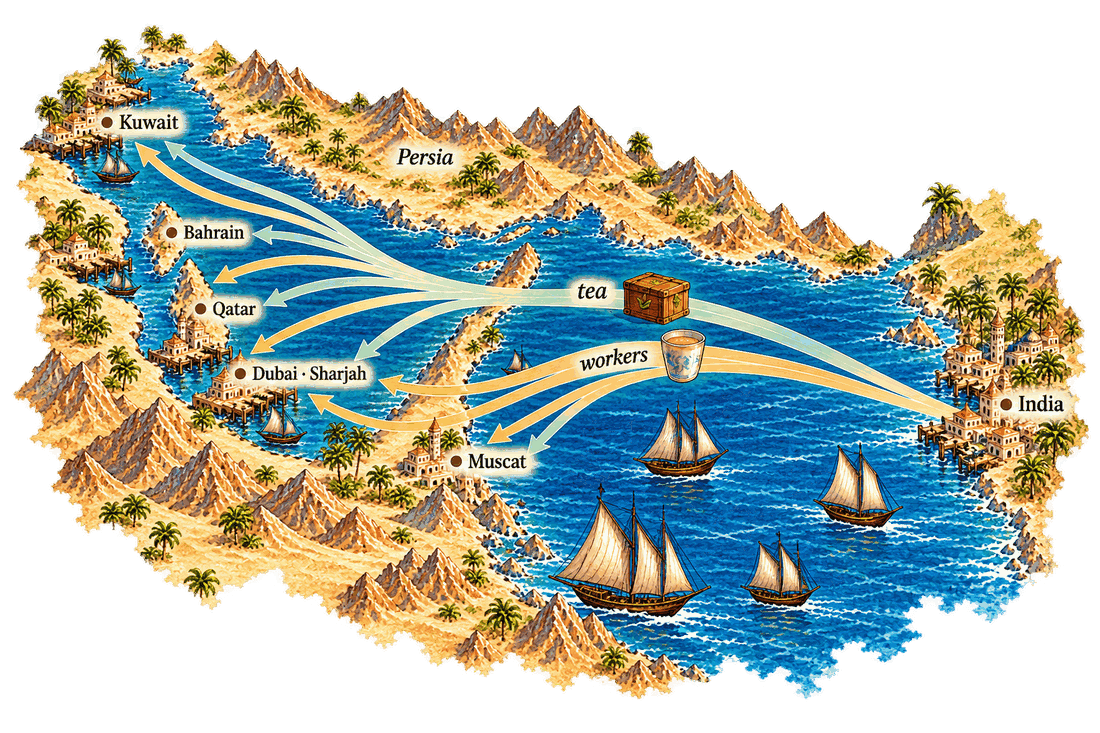
By the 1940s Indian tea was imported across the Gulf; from the 1960s and 1970s, workers from South Asia brought the milk tea that became karak.
Tea by Quota
During the Second World War, India controlled its tea exports by quota. British officials in the Gulf corresponded with the Government of India over how much tea Bahrain, Qatar, eastern Saudi Arabia, Kuwait, Muscat and the Trucial Coast could import, for local use, for re-export and for barter. The files survive in the India Office Records at the British Library.
Coffee Came First
Arabic coffee was the Gulf’s drink of hospitality before tea.
Tea Came by Trade
Around 1920, much of Bahrain’s tea was consumed by Persians or re-exported to Persia.
Karak Came with Migrants
South Asian workers brought strong, spiced milk tea from the 1960s and 1970s.

An Everyday Drink
Karak is now drunk across the Gulf, from roadside stalls to the home.
Coffee was the Gulf’s old welcome;
tea, and then karak, became part of daily life.
Karak is black tea boiled with condensed milk, often with cardamom or saffron — South Asian chai in its Gulf form.
With the journey told, what happens when people gather around the cup?
Next · Act ThreeThe Gathering